The install is a beginning
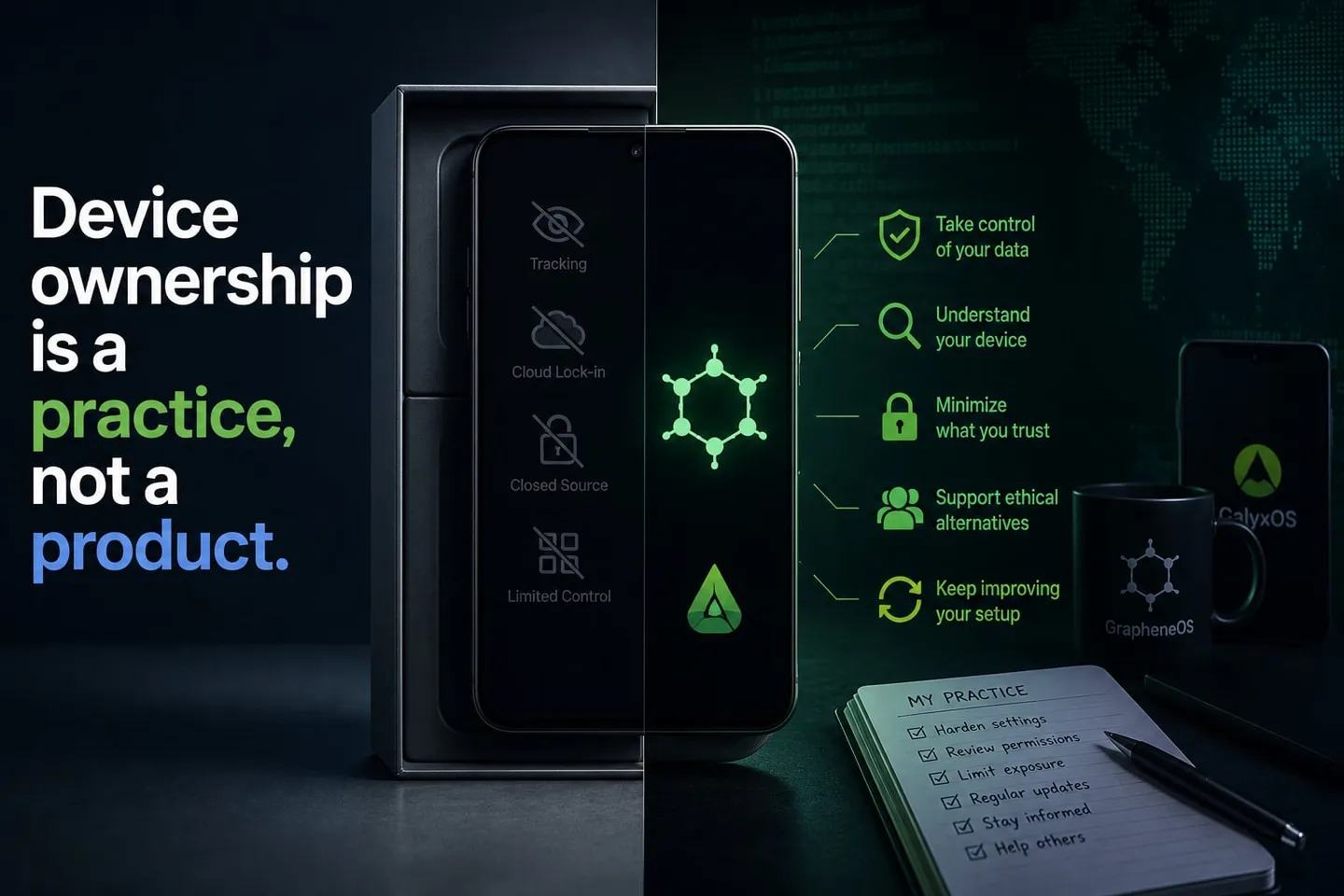
Replacing a stock operating system is a direct assertion of ownership: the hardware does not have to remain permanently tied to the software and service bundle chosen by its seller.
But the act of flashing is not the whole of ownership. A device remains dependent on firmware updates, boot integrity, application sources, account-recovery systems, network operators, and the owner’s ability to understand warnings and maintain a recovery plan.
Control should be legible
Good control is not a screen full of unexplained toggles. It is the ability to answer practical questions:
- Who signs and delivers updates?
- What happens when the device reaches end of life?
- Is the bootloader in the state expected by the project?
- Which applications depend on Google services or device-integrity checks?
- What data leaves because of an account rather than the operating system?
- How is the device recovered after loss, damage, or a failed update?
Reflash Lab’s verification records are designed around those questions. The aim is not to turn every customer into an Android platform engineer. It is to make the consequential parts inspectable.
Refusing two bad stories
The first bad story says surveillance and platform control are imaginary, so accepting the default is always rational. The second says buying a particular ROM installation makes every sophisticated threat disappear.
Both make ownership harder. Real agency starts with the narrower, more useful claim: changing the operating system can materially improve control and reduce specific exposures when the hardware, official support, configuration, and behavior fit the threat model.
Sources
- Android Security and Privacy — Android Open Source Project